Converter or manufacturer
Converter or medical adhesive tape manufacturer: what difference does it make to your device?
In the medical tapes industry, the terms ‘converter’ and ‘medical adhesive tape manufacturer’ are sometimes used interchangeably, even though they refer to two very different professions and two very different levels of industrial expertise. For an OEM looking for a subcontractor, this distinction is more than just a subtle difference in terminology: it determines the traceability of materials, the product’s adaptability and, ultimately, the reliability of the final device.
What is a converter?
A converter operates further down the adhesive value chain. It purchases ready-made adhesive materials from its suppliers and then processes them according to the customer’s requirements: precision die-cutting, lamination, packaging and, in some cases, printing. Its expertise lies in processing, not in the development of the adhesive material itself. A converter is therefore entirely dependent on the quality, availability and consistency of the raw materials supplied by a third-party manufacturer, with no direct influence over the product’s composition or properties.
What is a manufacturer of medical adhesive tapes?
A manufacturer, on the other hand, has full control over the development and production of the adhesive material at the early stages: formulation, coating onto a substrate, and polymerisation. This end-to-end control enables the precise adjustment of the product’s properties — adhesive strength, breathability, biocompatibility, mechanical strength — in line with the specifications of the final medical device, rather than being limited to a catalogue of standard materials.
This is the case with Gergonne, which formulates its adhesive compounds (acrylic, polyurethane, silicone) in-house and can adapt them through co-development with the client: incorporating specific substances, modifying mechanical properties, and adjusting the appearance.
This formulation capability requires dedicated production facilities — coating lines adapted to these different chemistries, cleanrooms, etc. — a necessary condition for meeting the requirements for medical devices under the MDR Regulation 2017/745.
Why does this difference matter for a medical device?
Medical devices are subject to strict traceability and regulatory compliance requirements (MDR 2017/745, ISO 10993 for biocompatibility). Working with a manufacturer of medical adhesive tapes means having full visibility over the origin and composition of the adhesive materials used, and being able to adapt a formulation to meet specific needs — such as increased breathability, performance in humid environments, or adhesion suitable for delicate skin.
A converter, on the other hand, remains dependent on the products available from its own upstream supplier, which limits its ability to adapt and may lead to longer lead times in the event of stock shortages or changes to the material.
Change control: a critical issue
In the medical sector, any modification to an adhesive material — whether a change in formulation, a switch to a different supplier of a raw material, or a change to a process — triggers a potentially cumbersome change control process: revalidation of performance, new biocompatibility tests, updating of the technical dossier, and, in some cases, a new regulatory notification. This process is time-consuming and incurs significant costs for the medical device manufacturer.
The difficulty is compounded when the supplier provides little or no information about the exact nature of the change made. The client is then required to approve a change without knowing precisely what has been altered in the material, which complicates the impact assessment and may lead to testing programmes that are more extensive than necessary, as a precaution.
A supplier that has full control over its own adhesive material — from formulation to production — changes this dynamic. This is the case with Gergonne, which, having precise knowledge of the composition and processes used for its own materials, can accurately document the nature of a change, anticipate its impact on the product’s properties, and support the client in compiling the change control dossier. In many cases, this transparency makes it possible to significantly simplify change management and reduce revalidation times.
Manufacturer and converter: roles that are sometimes combined
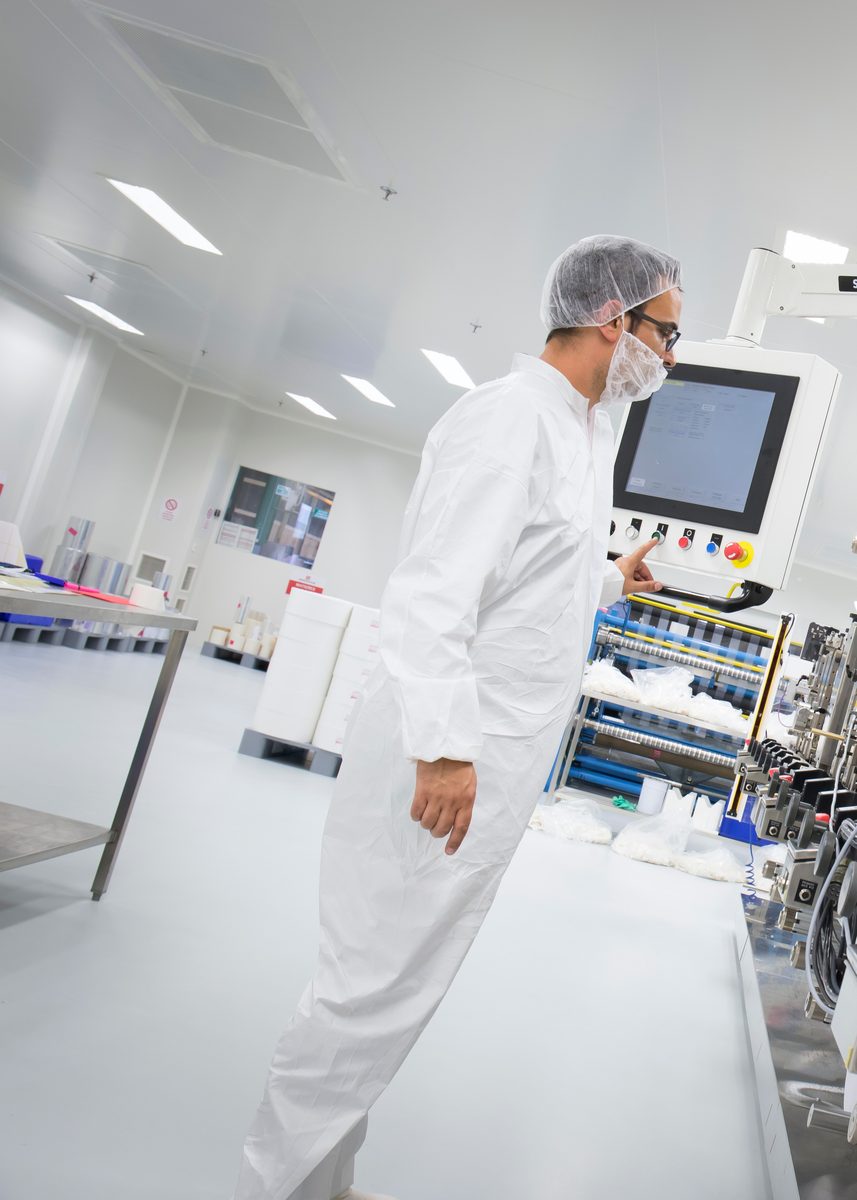
Some industrial players combine both areas of expertise: they develop and manufacture their own adhesive materials (coating) and also carry out the converting process — design, die-cutting, packaging — in-house. This is Gergonne’s approach: the company formulates its products in-house and applies the coatings on its own production lines, before converting them at the same site: tooling is designed by a dedicated engineering department, followed by rotary die-cutting in an ISO-8 cleanroom, then packaging (flat heat-sealing or rotary cold-sealing) right through to the finished, ready-to-use product.
This vertical integration — from chemical formulation to the finished component, under an ISO 13485:2016-certified quality system — simplifies the supply chain for the client, who may be the legal manufacturer of the medical device: a single point of contact, greater confidentiality regarding developments, enhanced control over lead times and a reduction in supply chain risks.
In summary
Choosing between a converter and a manufacturer is, above all, a matter of selecting a level of industrial expertise suited to the requirements of one’s medical device.
The converter offers recognised processing expertise but remains dependent on the materials supplied by its suppliers.
The manufacturer, by controlling the production of adhesive materials in-house, offers a degree of flexibility and traceability that medical regulations often make essential. When formulation, coating and processing are all carried out by a single, vertically integrated player, the client benefits from simpler management, greater responsiveness and a more secure supply chain — all criteria that should be taken into account right from the stage of selecting an adhesives partner.
Are you developing a medical device and wondering which adhesive partner is best suited to your project? Our team can discuss your specific requirements with you, from formulation right through to the finished product. Please contact our sales department to discuss this further.
