
How can you ventilate a waterproof enclosure
How can you ventilate a waterproof enclosure without compromising its protection
A waterproof enclosure protects the electronics, sensors, or devices it houses from water, dust, and contaminants. However, if sealed without proper precautions, it creates a problem of its own: the air trapped inside reacts to changes in temperature and pressure, constantly straining the seals meant to protect it. The solution is not to sacrifice waterproofing, but to allow the enclosure to “breathe” in a controlled manner, using a venting membrane that balances pressure, evacuates moisture, and continues to block liquid water and dust.
Why does a waterproof housing need to breathe?
The air inside a sealed housing follows a simple physical principle: when the temperature rises, it expands and the internal pressure increases; when it drops, it contracts and the pressure falls. These cycles repeat every time a component is turned on, every time it’s exposed to sunlight, and every time rain or washing causes the housing to cool suddenly. Changes in atmospheric pressure, particularly with altitude, add an additional strain. Without ventilation, this pressure difference results in mechanical stress on the seals, solder joints, adhesive bonds, and sometimes on the housing itself, which can warp. Over time, the waterproof seal deteriorates, and water eventually finds a way in.
Condensation: the second consequence
When a hot housing cools down, the air inside contracts, and the housing tends to draw in outside air through its weakest points—often the seals. If this air is humid, it carries water vapor that condenses on the cold surfaces as soon as the dew point is reached. This phenomenon is well known in automotive lighting, where it causes fogging on headlight lenses, but it also affects sensors, cameras, control units, and outdoor electronics, among other components. Trapped moisture promotes corrosion, short circuits, sensor drift, and component degradation.
How does a ventilation membrane work?
The most common solution is to equip the housing with an opening protected by a microporous membrane, typically made of ePTFE. Its pores are much larger than air and water vapor molecules, which pass through freely, but much smaller than water droplets, which are stopped by surface tension. The membrane thus balances the pressure between the inside and outside, allowing water vapor to escape while blocking liquid water, dust, and contaminants. An
oleophobic coating, available on certain models, also helps repel oils and certain detergents that might otherwise clog its pores.
What ventilation solutions are available?
A simple hole allows air to pass through, but also lets in water and dust, and is suitable only for undemanding applications. Conversely, a completely sealed enclosure requires oversized seals and a thicker shell to withstand pressure fluctuations, resulting in higher costs and a larger footprint, without eliminating the risk of condensation.
The ventilation membrane is the most common compromise. It comes in several forms: adhesive membranes/vents, which are affixed to the enclosure wall and offer minimal bulk and great flexibility in integration; screwed-in or clip-on membranes/vents, mounted in a hole provided for this purpose; and welded or overmolded membranes, integrated into the part’s manufacturing
process. The choice depends on the enclosure’s geometry, the assembly rate, and the desired level of protection.

How to choose a ventilation membrane?
The first criterion is airflow rate, which determines how quickly pressure equilibrates. It must be suited to the enclosure’s volume and the rate of temperature changes: a small sensor and a large computer have different requirements.
The second criterion is water resistance, measured in particular by the water intrusion pressure—that is, the pressure the membrane can withstand before water penetrates it. It must be appropriate for the environment: rain, splashes, temporary immersion, or high-pressure cleaning.
Next is the target protection rating. The IP rating, defined by the IEC 60529 standard, specifies protection against solid objects and liquids; for example, IP67 corresponds to dusttightness and protection against temporary immersion. For road vehicles, IP69K, defined by the ISO 20653 standard, specifies resistance to high-pressure, high-temperature water jets. The housing will only be compliant if the membrane, its adhesion, and its installation are all compliant together.
It is also necessary to verify temperature resistance, compatibility with the fluids encountered (oils, fuels, detergents, salts), and the nature of the substrate to which the diaphragm will be bonded, as the quality of the bond depends on this. Finally, the size of the diaphragm must be compatible with the available space.
Common mistakes
Several mistakes occur frequently:
– an undersized membrane, which restores pressure too slowly;
– insufficient surface preparation, which compromises adhesion;
– ignorance of the fluids present, which cause the membrane to become fouled;
– validation performed only at room temperature, even though thermal cycles are what reveal defects.
It is recommended to test the housing, complete with its membrane, under representative conditions: temperature cycles, exposure to humidity, and water jets.
An example: the GERGOVENT line
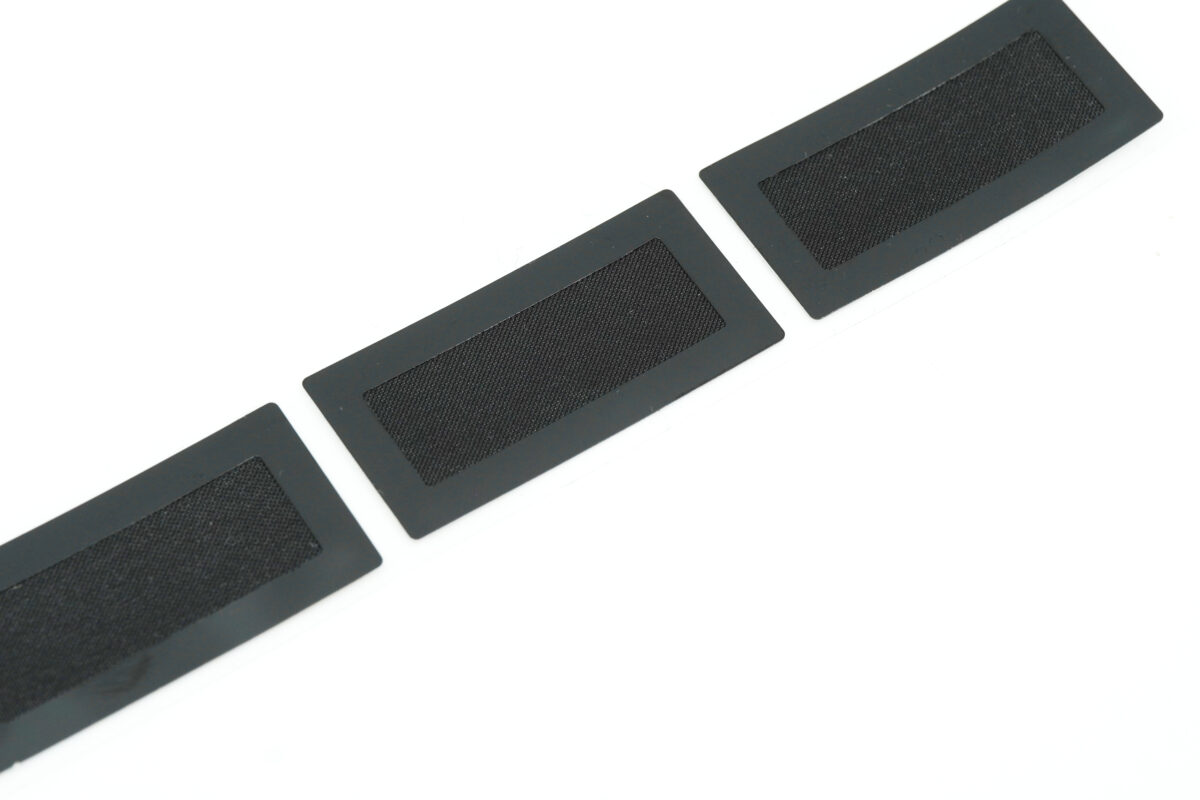
Gergonne designs and manufactures ePTFE adhesive membranes in its GERGOVENT line.
The VM16, for example, combines a dual-layer ePTFE and polyamide membrane with Side Protect technology, which protects the edges of the membrane during high-pressure water jets—a critical consideration in automotive headlights.
Conclusion
Ventilating a sealed enclosure means allowing it to “breathe” without letting in what it’s meant to keep out. When properly selected and positioned, a ventilation membrane reduces stress on seals, limits condensation, and extends the service life of components.
To choose the right solution for your application, contact the Gergonne team: we’ll advise you and provide samples.
